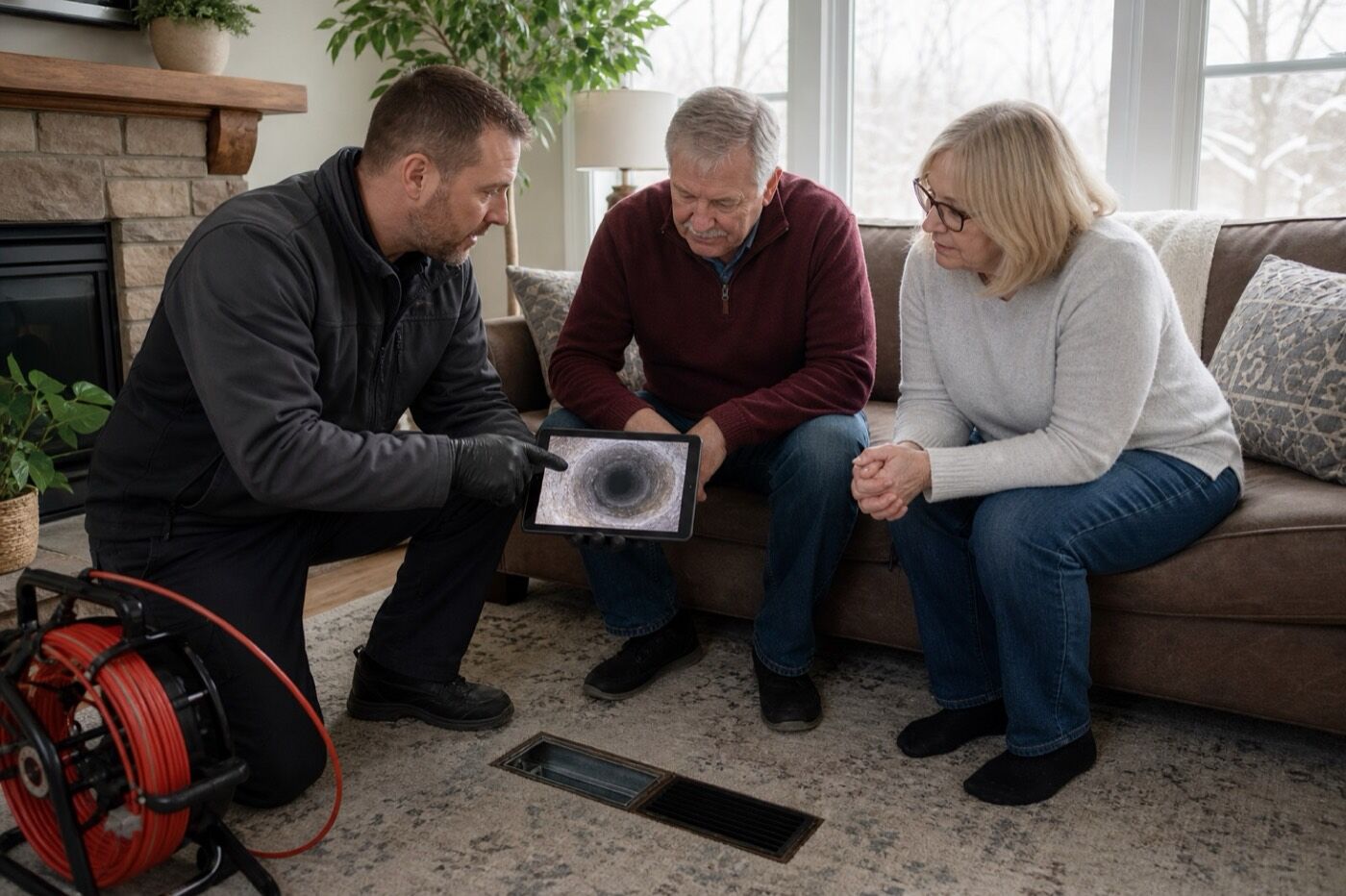
What is typical of older Minneapolis housing
Many older Minneapolis homes are bungalows, foursquares and duplexes built long before modern construction habits. Their heating systems have often changed over time, so the ductwork may have been added or reworked when a home converted from a boiler or gravity furnace.
Some of these homes use panned joist returns, where a sheet-metal-covered joist space carries return air. Renovation dust and plaster debris can also settle in the system, so the ducts may look different from home to home.
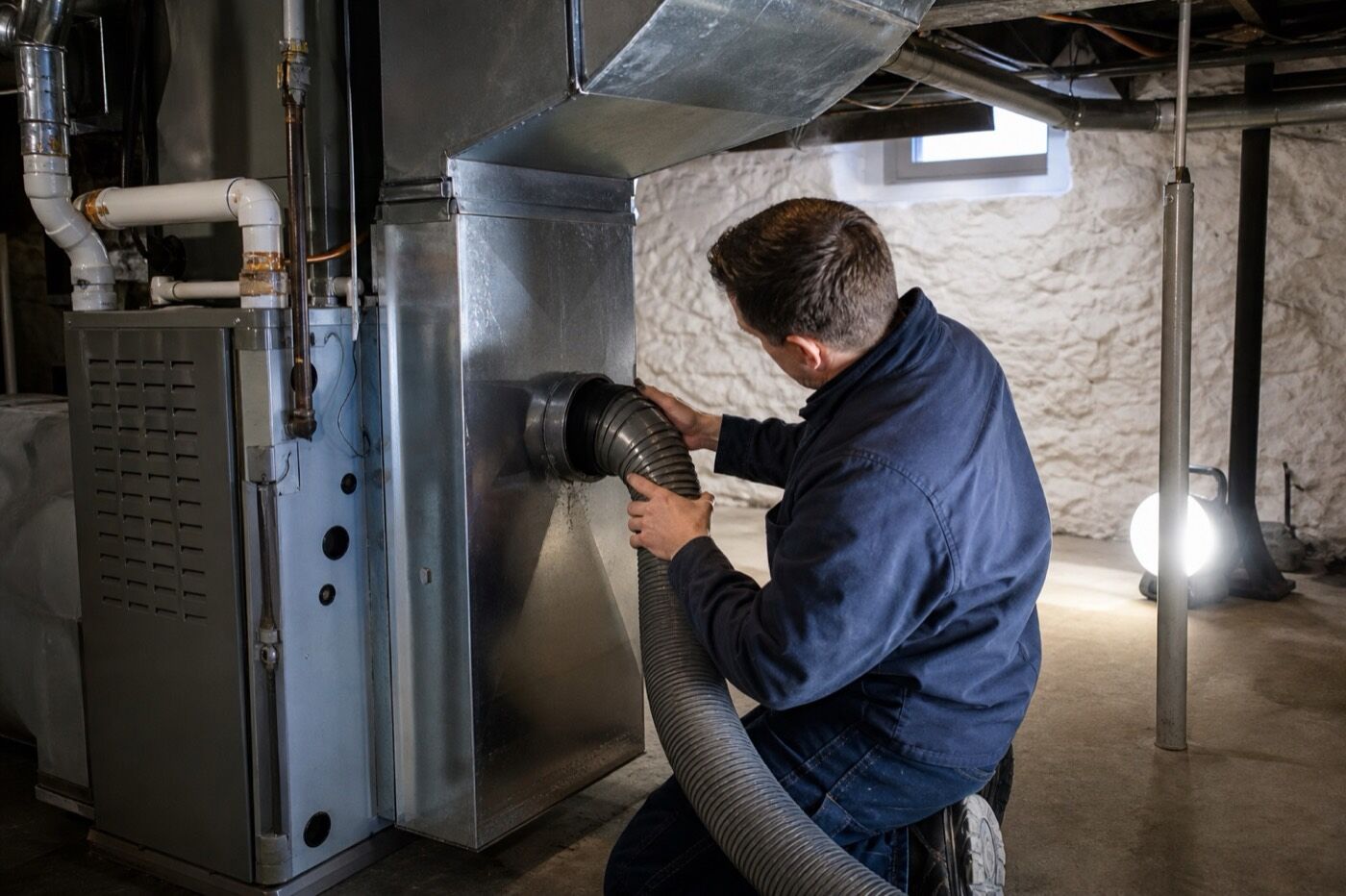
Signs worth checking
- Dust that comes back quickly after you clean.
- Visible debris or grit inside registers and return grilles.
- Rooms that get noticeably less airflow than others.
- A musty or stale smell when the furnace or air conditioner starts.
- Recent renovation, sanding or plaster work while the system was running.
Old duct insulation and asbestos
Some older homes have duct wrap or tape that may contain asbestos. Do not scrape, cut, sand or vacuum it. If you see worn or crumbling wrap, leave it alone and ask a licensed professional to assess it first.
Related reading: winter indoor air quality in Minnesota homes.
Common questions
How do I know if my older home's ducts are worth inspecting?
Look for dust that returns quickly after cleaning, visible debris at the registers, uneven airflow between rooms or a musty smell when the furnace starts. Any of these may suggest the system is worth a closer look.
Can renovation dust end up in the ducts?
Yes. Sanding, plaster work and demolition create fine dust that can be pulled into open registers and returns while the system runs. Covering vents during work and checking the ducts afterward can help.
Is it safe to clean ducts wrapped in old insulation?
Not until it has been assessed. Some older homes have duct wrap or tape that may contain asbestos, and disturbing it can release fibers. Ask a licensed professional to assess it before anyone cleans, cuts or removes it.
What are panned joist returns?
In some older homes, the space between floor joists is closed with sheet metal and used as a return air path instead of a round duct. These cavities can collect dust and debris, and the seams may leak, so they are worth checking.