Why lint build-up matters
Not all lint stays in the screen. Some escapes past it and collects in the duct and in the exterior hood. As the build-up grows, it restricts airflow, so the dryer may run hotter and longer to dry the same load.
Heat, lint and restricted airflow in one place is the combination that can raise the risk of a fire.
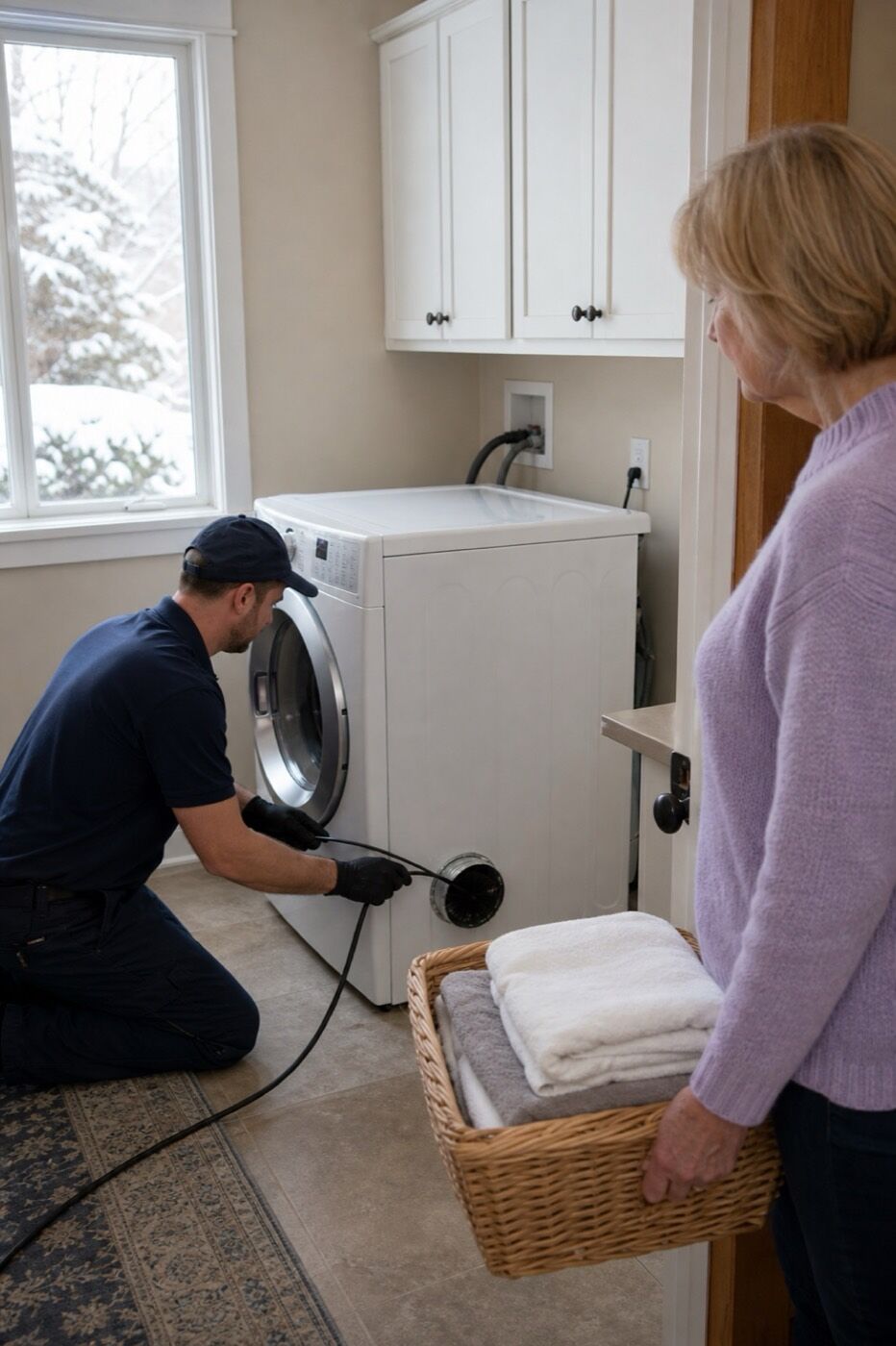
Warning signs to watch for
- Clothes take longer to dry than they used to.
- The dryer or the laundry room feels hot.
- You notice a burning smell when the dryer runs.
- Lint collects around the outside vent hood.
- The flap on the outside hood does not open when the dryer runs.
- The duct is long, crushed, or made of foil or plastic flexible material.
What you can do between cleanings
- Clean the lint screen after every load.
- Keep the area around the dryer clear of clutter and anything that can burn.
- Check the outside hood, including for snow, ice or cottonwood fluff.
- Do not run the dryer when you leave home or go to bed.
- Follow the dryer manufacturer’s manual.
If you smell gas or see damaged wiring, stop using the dryer and contact your gas utility or a licensed professional.
Common questions
How often should a dryer vent be cleaned?
There is no single schedule that fits every home. The right cleaning interval can depend on how much you use the dryer, how many people live in the home and how long the vent run is. Watch for the warning signs above and follow the dryer manual for guidance.
Is a foil or plastic dryer duct safe?
Flexible plastic or foil ducts can sag, crush easily and trap lint in their ridges, which may restrict airflow. Check your dryer manual for the duct type it calls for, and ask a licensed professional if you are unsure what suits your setup.
Can I clean my dryer vent myself?
You can clean the lint screen and the parts of the vent you can reach safely. Long runs, roof exits and ducts with several turns are harder to clear fully, so lint may remain out of reach.
Does a gas dryer vent need cleaning too?
Yes, lint can still build up in a gas dryer vent. A gas dryer also vents combustion gases through the same duct, so a blocked vent matters even more. Work on the gas line itself belongs to a licensed professional.